
Blog
Ship Finance - helping the industry navigate through increasingly uncertain waters
09 February 2026 | Grosvenor House, Dubai

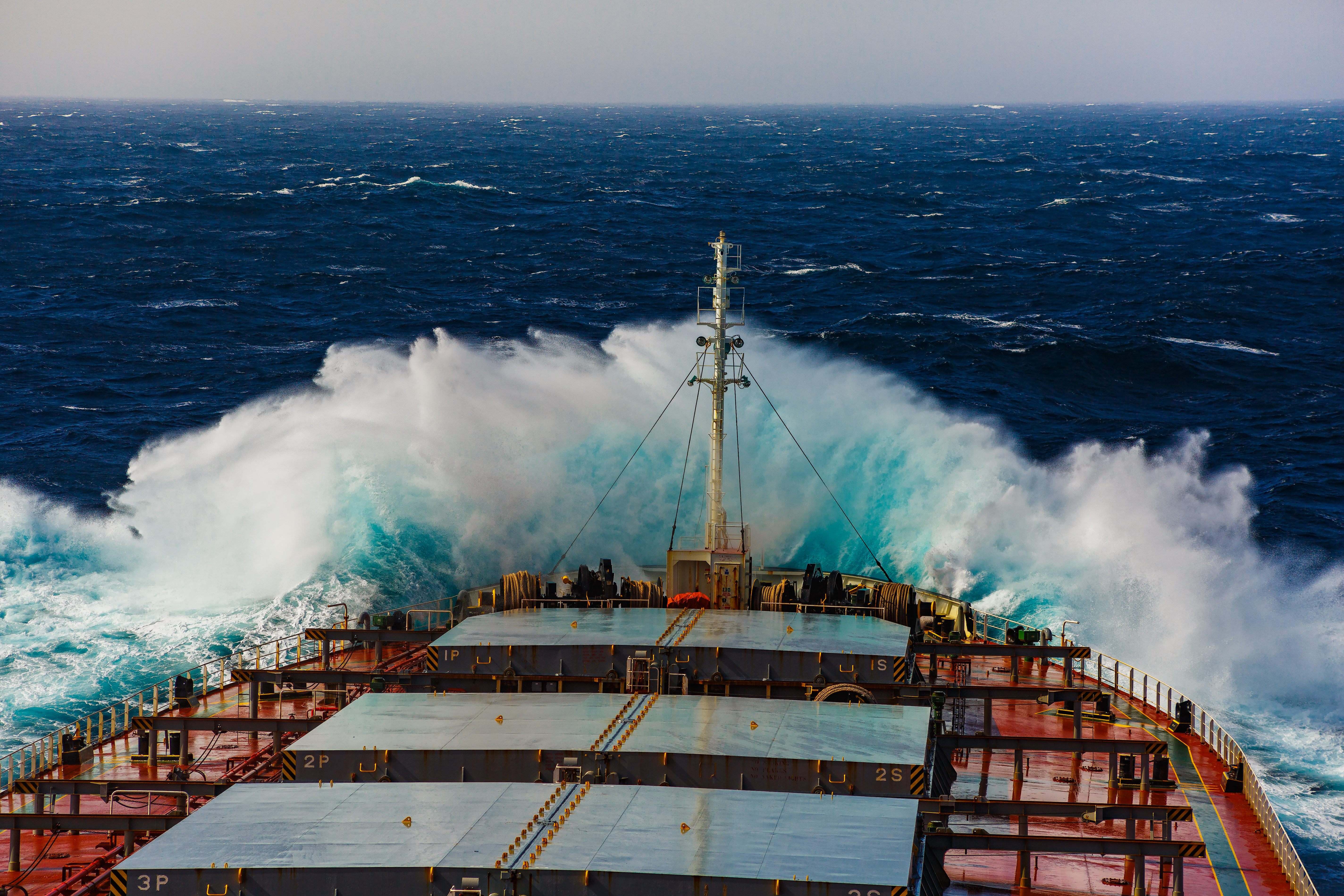
Ship Finance at a Crossroads: Navigating Volatility, Regulation, and the Race to Green Capital
January 2026
Global shipping has always been cyclical. What makes today different is not volatility alone, but the simultaneous collision of geopolitics, regulation, capital realignment, and decarbonisation pressure. For shipowners, lenders, investors, and regulators alike, ship finance is no longer just about access to capital. It is about access to the right capital, at the right time, under the right conditions.
Against this backdrop, the SFTC Conference arrives at a pivotal moment. As financial markets recalibrate risk, regulators reassess timelines, and the industry debates the pace of the green transition, one question dominates boardrooms and credit committees:
How do we finance ships and shipping businesses sustainably in an unpredictable world?
This article brings together the critical themes from two interconnected SFTC sessions: Financial Strategies in a Volatile World and Developing Financial Tools to Sustain Support for the Green Transition. Together, they form a single reality that the industry can no longer afford to treat separately.
Volatility Is No Longer a Phase. It Is the Operating Environment.
Economic uncertainty used to arrive in waves. Today, it feels permanent.
Trade wars, sanctions, tariff regimes, and shifting trade corridors have fundamentally altered the risk profile of shipping assets. Financing decisions now require lenders and investors to model scenarios that include geopolitical fragmentation, supply chain realignment, and abrupt regulatory shifts.
For shipowners, this volatility translates into:
- Higher scrutiny on counterparty exposure
- Increased covenant complexity
- Shorter visibility on long-term cash flows
For financiers, it means reassessing traditional assumptions around asset liquidity, resale values, and jurisdictional exposure.
The old playbook of stable globalisation no longer applies.
This is precisely why conversations at SFTC around risk mitigation amidst geopolitical and regulatory uncertainty are not theoretical. They are urgent.
Regulatory Uncertainty and the IMO ‘Pause’: Clarity Deferred, Not Denied
The International Maritime Organization’s recent signals around pacing and sequencing of net-zero measures have created both relief and confusion.
On one hand, a pause provides breathing room for owners grappling with fuel choices, technology maturity, and retrofit economics. On the other, uncertainty complicates financing structures for assets expected to operate over 20–25 years.
Key questions now facing the industry:
- How should financiers price transition risk when regulation timelines are fluid?
- Should newbuilds assume stricter compliance mid-life?
- How do lenders avoid stranded asset exposure?
Rather than reducing urgency, regulatory ambiguity increases the need for better financial tools. This includes:
- Flexible loan structures linked to emissions performance
- Transition finance instruments rather than binary “green” labels
- Clearer alignment with frameworks such as the Poseidon Principles
At SFTC, these topics are not discussed in isolation but as part of a broader reassessment of how regulation shapes capital behaviour.
Conventional Bank Lending: Returning, but Selectively
After years of retrenchment, there are signs that conventional bank lending to shipping may rise again. However, this return is cautious and highly selective.
Banks today are:
- More capital constrained
- More ESG-driven
- More sensitive to reputational and transition risk
This means access to bank finance increasingly depends on:
- Fleet profile and age
- Fuel strategy credibility
- Governance and transparency standards
For shipowners, this creates a bifurcated market: those who can demonstrate a credible transition path gain access to cheaper capital, while others are pushed toward higher-cost alternatives.
SFTC’s exploration of whether bank lending will truly rise, and under what conditions, is essential for anyone planning fleet expansion or renewal.
Alternative Lenders, Leasing Vehicles, and New Capital Pools
As banks tighten filters, alternative lenders have stepped into the gap.
Private credit funds, leasing structures, export credit agencies, and regional financiers now play a larger role in ship finance. Chinese leasing vehicles, once dominant, face increasing scrutiny due to geopolitical and capital flow concerns, while other leasing hubs are evolving rapidly.
Simultaneously, maritime decarbonisation funds and blended finance structures are emerging to support:
- Alternative fuel newbuildings
- Environmental retrofits
- Energy efficiency upgrades
The key challenge is alignment. Not all capital is patient. Not all green capital understands shipping risk. Not all shipowners are prepared for the reporting and transparency requirements attached to sustainability-linked finance.
Understanding which capital source fits which strategy is no longer optional.
This is why SFTC places equal emphasis on financial structure, risk assessment, and long-term viability.
Financing the Green Transition: From Intent to Execution
Decarbonisation is no longer a future ambition. It is a present financial decision.
Yet financing green shipping remains complex due to:
- Uncertain fuel pathways
- High upfront capital costs
- Technology obsolescence risk
- Skills gaps across the industry
Newbuilds powered by alternative fuels require confidence not only in technology but also in future fuel availability and pricing. Retrofits demand robust ROI models that account for regulatory incentives and carbon pricing mechanisms.
Emerging carbon markets add another layer of opportunity and risk. Without standardisation and transparency, they risk undermining trust and enabling greenwashing.
At SFTC, discussions move beyond slogans to address:
- How green finance can avoid credibility traps
- How regulatory scrutiny of sustainability claims is likely to evolve
- How financial institutions can assess transition risk realistically
Classification, Data, and Trust: The Invisible Foundations of Capital
One of the most overlooked aspects of ship finance is classification and data integrity.
As lenders increasingly rely on emissions data, performance benchmarks, and compliance projections, classification societies and digital systems become central to investment decisions.
Sound classification underpins:
- Asset valuation
- Risk pricing
- Covenant structuring
At the same time, digitalisation and AI are emerging as enablers of sustainable shipping by improving fuel efficiency, maintenance forecasting, and emissions reporting.
Capital will increasingly flow toward owners who can demonstrate data-backed credibility, not just ambition.
Why SFTC Matters Now More Than Ever
The SFTC Conference is not just another industry event. It is a convergence point for decision-makers navigating one of the most complex periods in maritime finance history.
By bringing together discussions on volatility, regulation, alternative capital, and green finance, SFTC enables participants to:
- Connect financial strategy with sustainability reality
- Understand how lenders, investors, and regulators are thinking
- Anticipate where capital will flow next
- Avoid costly misalignment between fleet decisions and financing conditions
Whether you are financing ships, owning them, regulating them, or investing in them, the cost of not engaging with these conversations is rising.
👉 Register for the SFTC Conference to gain insight, perspective, and practical understanding from those shaping the future of ship finance and sustainable shipping.